

Thursday, October 29, 2015

Tuesday, October 20, 2015
May the Force Be With You!
Today we did a lab in class that relates to how forces on objects change their properties and motion of objects such as play-dough, marbles, and washers. Let's see how some people explain occurrences of this lab.
1. First, lets ask Mira to explain what a force is?
Me: Mira can you explain to be what a Force is?
Mira: A push or pull factor that is exerted on another object that can be calculated using mass and acceleration.

Me: :)
2. Next, lets ask Charlie what happens to the marble.
Me: Charlie, what is happening to the marble when opposite forces are applied to the marble?
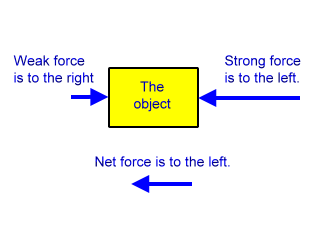
Charlie: Because the marble is in accelerate we can see there is an unbalanced net force. Also, if the direction changes the motion can affected through net force because if equal force occurs there is equal speed but if forces are not equal a change in acceleration can occur.
Me: :)
1. First, lets ask Mira to explain what a force is?
Me: Mira can you explain to be what a Force is?
Mira: A push or pull factor that is exerted on another object that can be calculated using mass and acceleration.

Me: :)
2. Next, lets ask Charlie what happens to the marble.
Me: Charlie, what is happening to the marble when opposite forces are applied to the marble?
Charlie: Because the marble is in accelerate we can see there is an unbalanced net force. Also, if the direction changes the motion can affected through net force because if equal force occurs there is equal speed but if forces are not equal a change in acceleration can occur.
Me: :)
Monday, October 19, 2015
Displacement
DISPLACEMENT 2.1

Displacement is the distance between the point A(where you started ) and point B( where you ended).
It is a vector quantity because it has both a magnitude and direction.
Video describing the difference between displacement and distance.
LINKS:
This link helps you practice your displacement skills.
Velocity vs. Position Graph 3.1
Velocity v.s Position time Graph
- Velocity is a vector quantity
- Position/time is a scalar quantity.
Acceleration
 |
| His velocity is increasing and becoming unconstant, therefore displaying acceleration. The picture above displays acceleration, which is the change in velocity over the change in time(a=change in v/change in time). Acceleration is described on a velocity vs time graph. There is no acceleration existing if the velocity time graph contains a horizontal line, meaning that the velocity is constant or zero. In the positive section of the v/t graph, the acceleration is in a positive direction. The acceleration depends on a positive or negative slope. The acceleration speeds up when travelling away from the origin while it slows down when travelling toward it, regardless of being in the negative or positive zone. |
Sunday, October 18, 2015
Blogging in Physical Science

Our blog can be used for a variety of purposes. All physical science students can post extension work, reflections from our classwork, relevant website links, relevant videos, or any other content worth sharing to peers. We encourage you to comment on other students work and engage in learning in a way that is meaningful to you. The only rule of the blog is to be respectful and appropriate!
Wednesday, October 14, 2015
Force 5.2 Field Existence
Field Existence without Interaction


WEBSITES
Go to this website for a video:
http://physics.about.com/od/physics101thebasics/f/FieldsPhysics.htm
Fields can exist without anything interacting with them. The Earth's gravitational field would still be there if nothing was on the planet. The field around a magnet would still be there even if there was no metal interacting with it.
Fields can exist without anything interacting with them. The Earth's gravitational field would still be there if nothing was on the planet. The field around a magnet would still be there even if there was no metal interacting with it.
Monday, October 12, 2015
Force 4.3 Gravitational Force (Weight)
GRAVITATIONAL FORCE (WEIGHT)
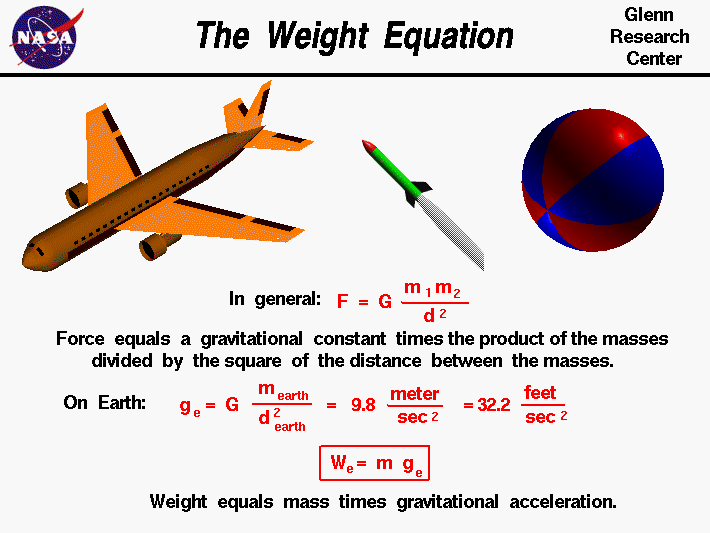
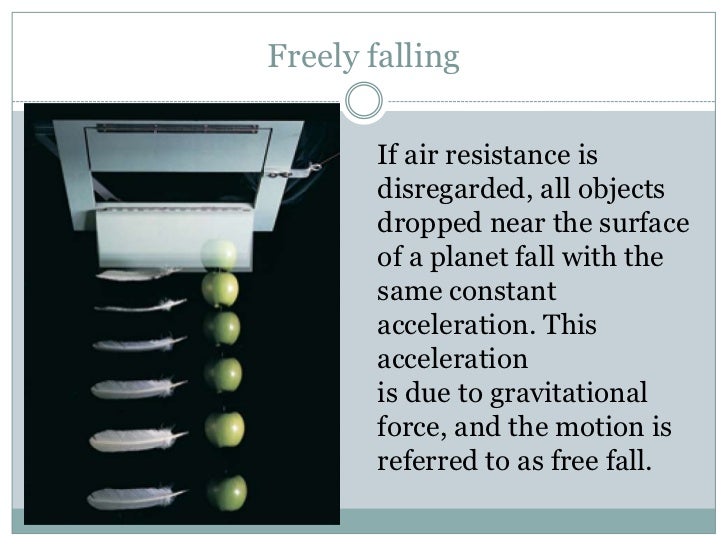
Gravitational force is the force two bodies in the universe attract each other. The quantity of force depends on the masses of the object and the distance between them. The force can be described as weight because weight is calculated by mass times acceleration or mass times the acceleration of gravity either way weight is a force. So weight is the force that an object is pulled towards a celestial body in space, the amount of gravitational force is proportional to the size of the celestial body, the larger the stronger the force.
This video will help you understand gravitational force

This picture shows weight
It shows peoples force acting on the Earth
Saturday, October 10, 2015
Friday, October 9, 2015
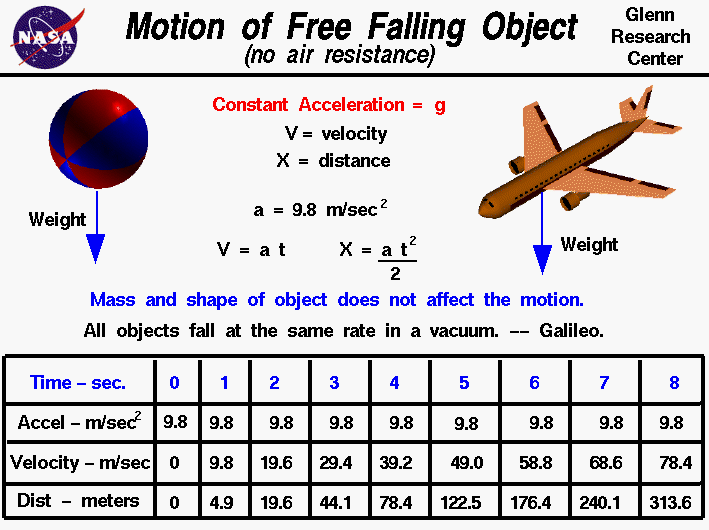
Force 5.3 Gravitational Force Proportional To Mass
Wednesday, October 7, 2015
Force 4.1 Force with Newtons
Force with Newtons
Claudia Diaz & Kate MacLean
F=M x A or W= M x G

This image shows that the finger and the wall are pushing with the same amount of force :)
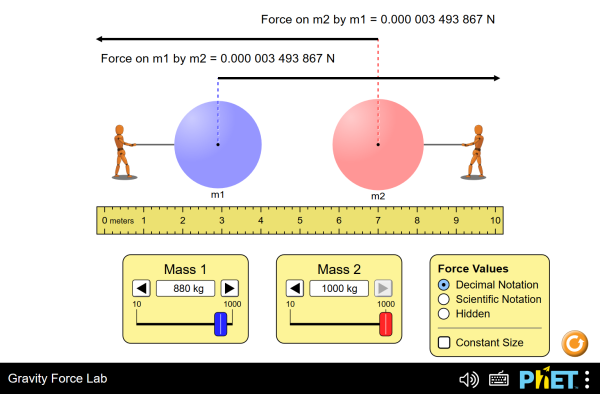 This picture shows that the blue circle person has more force because the blue ball has more mass in the simulation.
This supports Newtons 2nd law of motion because it is F= M x A. When the video shows 2 things pushing against each other that demonstrates the formula for Force! :D
Force is also a vector quantity because mass is a number and then acceleration involves direction :)
Monday, September 21, 2015
Acceleration

This means that the acceleration equals the change in velocity over change in time making the lable m/s/s or m/s squared.
Tuesday, September 8, 2015
Motion Objective 2.2 Velocity!
Motion Objective 2.2 Velocity!
 Picture/ Formula of Velocity!
These guys will help you understand the concept of velocity as when compared to speed!

These guys will help you understand the concept of velocity as when compared to speed!
Motion 2.2 Velocity
Velocity
This picture explains the formula for velocity.
Friday, September 4, 2015
Motion 1.2 Motion diagrams
Motion Diagrams
Jackson and Colby
This diagram shows an object moving in a positive direction and negative acceleration then the object turns around and heads towards the origin with a constant velocity.

Wednesday, August 26, 2015
Motion 2.1 Displacement
DISPLACEMENT
Displacement a vector quantity. It is the distance from the start point to the end point.

LINK:
http://www.physicsclassroom.com/class/1DKin/Lesson-1/Distance-and-Displacement
Monday, August 24, 2015
3.1 Position vs. Time
3.1 PoSiTiOn vs. TiMe
CLICK LINK AT BOTTOM
This Image properly shows a Position vs. Time graph because an object is moving away from the origin and starting at 5 m. I can tell because of the position labeled on the y-axis. I also can tell that the object is moving for 5 seconds.
This video correctly portrays the objective 3.1 position vs time.
CLICK HERE
Motion 3.1 Position vs.Time
Motion 3.1 Position vs. Time

The image above shows an object moving and resting. The object starts at the origin. The object moves quickly away from the origin then rests then slowly moves towards the origin. This shows how the graph relates to the objects movement and frame of reference.
Tuesday, August 18, 2015
Frame of Reference
Frame Of Reference
Images:
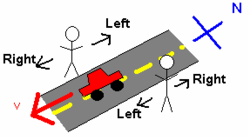
THESE IMAGES MAY BE SUBJECTED TO COPYRIGHT!!! BEWARE
Websites:
This one is also a good website (simulation)
THESE WEBSITES MAY ALSO BE SUBJECTED TO COPYRIGHT!!!! BEWARE AGAIN!!!
Videos:
images may be subjected to copyright. Beware.... again
Subscribe to:
Posts (Atom)